

Experiments with watercolor
Three ways to make "black" without using black.

As I searched the internet for the right way to make black without using a black pigment, I kept getting confused by the suggested variations of which paints to mix.
In my frustration, I decided to put it to paper and explore first-hand what each article suggested.
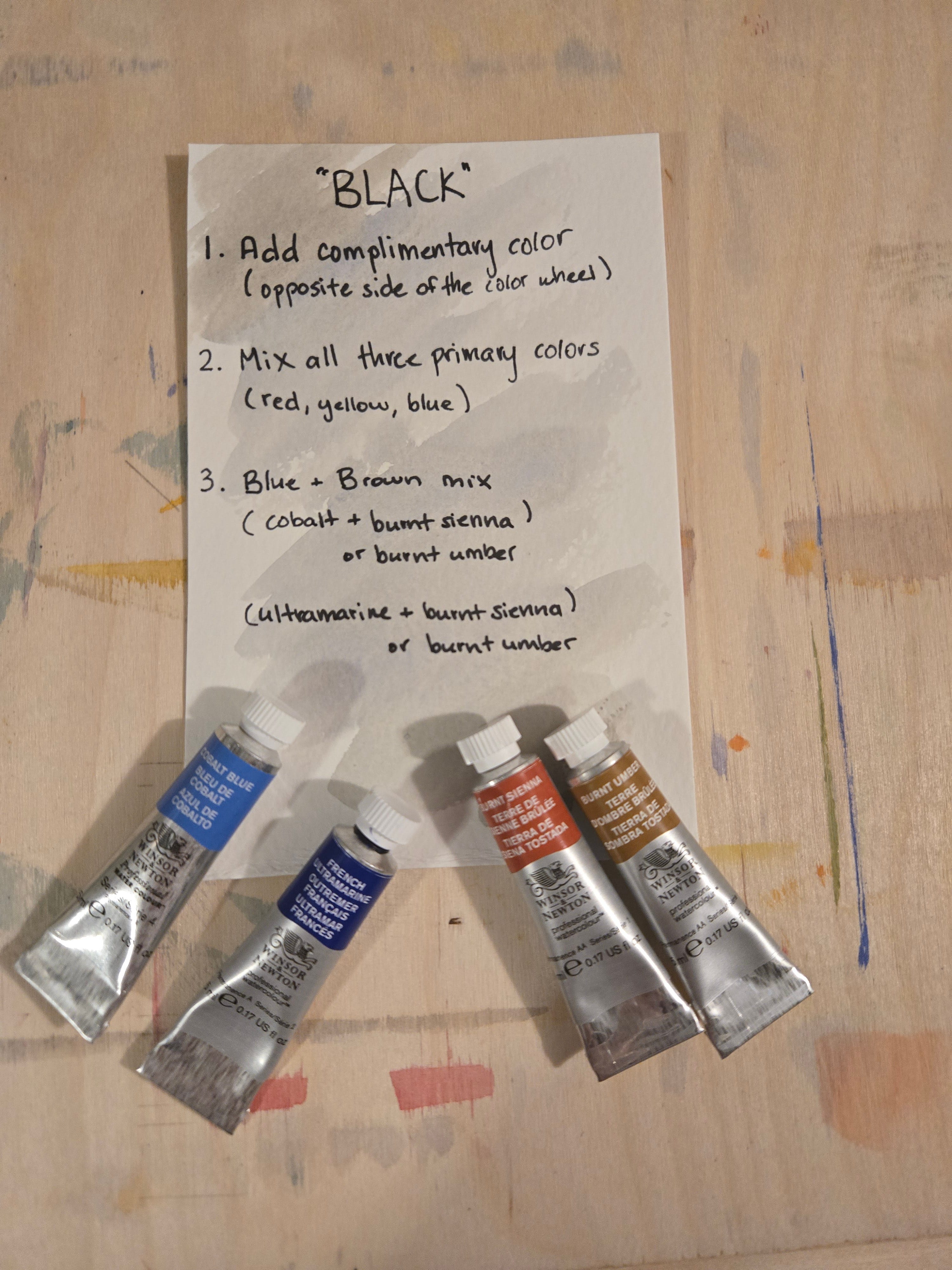
Based on my research (please add any comments if you have more insight!) there are three main ways to make black.1
Mix complimentary colors - opposite sides of the color wheel
Mix all three primary colors - red, yellow, blue
Mix a blue + brown, specifically:
Cobalt Blue + Burnt Sienna OR Burnt Umber
Ultramarine Blue + Burnt Sienna OR Burnt Umber
It was bullet #3 that really had me stumped, since different artists seemed to focus on a different “ideal” combination. Not knowing which to follow, I did a quick mixing chart study to figure out their differences.
Here’s how it turned out:
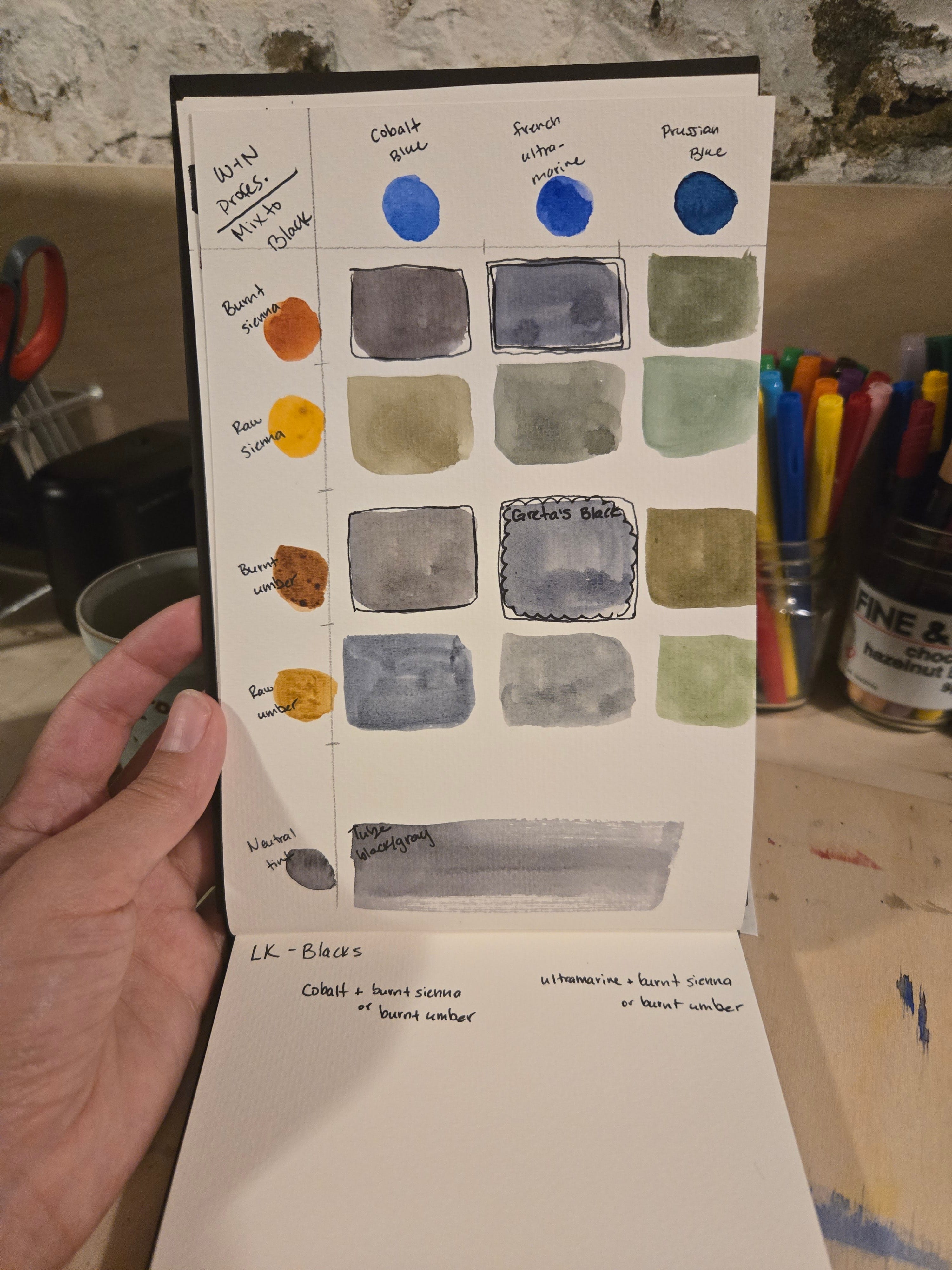
I added a column for Prussian Blue since it was another deep blue that I happened to have in my palette, but I quickly discovered that it made the mixes too green, so you can ignore the third column in my chart.
I also added both “raw” versions of Sienna and Umber because I didn’t understand the difference. I see that those lean more yellow and are also not my favorites for making black.
Doing this first-hand helped me understand the nuances of how the colors combine. I tend to feel like I’m “wasting” a lot of paint when making charts like this, but now I have both the reference page and the knowledge after doing this experiment so I think it’s time for me to reconsider what constitutes paint well spent.
-Lana
Why not just use black you ask? I believe it’s because the black tubes can be quite stark. Creating black from the palette you’re already using has a more harmonious result with the rest of your painting. (This is my best understanding at least. If you are a seasoned watercolorist and have more thoughts here, please share!)
Great experiment!